

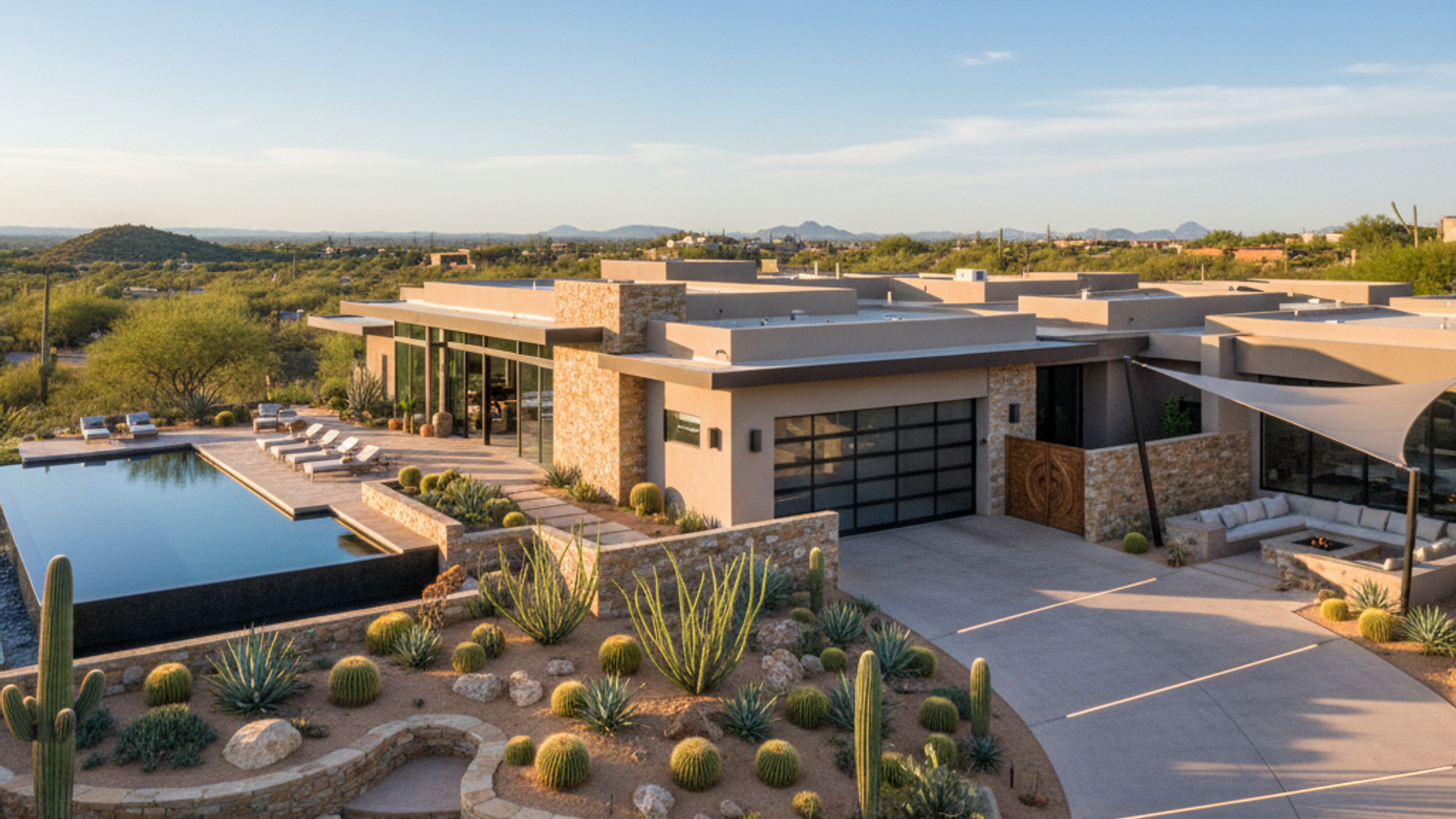
Scottsdale, AZ covers over 184 square miles of the Sonoran Desert, stretching from the urban core of Phoenix, AZ up to the foothills of Carefree. The city contains a massive mix of luxury resorts, golf courses, and diverse residential areas. Relocating buyers often find that the local market operates differently than other metropolitan suburbs.
Moving here requires understanding the distinct zones, from the historic architecture in the heart of old town to the expansive new builds in the north. This 2026 overview covers local housing data, property tax structures, and daily commuting realities. Buyers should use these insights to evaluate which neighborhoods align with their budgets and daily routines.
What It Costs to Live in Scottsdale
The overall cost of living index in Scottsdale sits about 15% higher than the US average for 2026. Housing expenses drive the bulk of this premium, sitting 22% to 42% above the national baseline. Buyers should prepare their budgets for these elevated housing costs before starting a property search.
A family of four can expect monthly operational costs around $6,053 this year. This figure includes baseline expenses but excludes mortgage or rent payments. The local index remains lower than many coastal California markets, but it outpaces neighboring Arizona cities.
Buyers moving from the Midwest or South often experience sticker shock when reviewing property values. Preparing for these regional differences makes the initial property search much smoother. It helps to review specific utility and daily expense data to build an accurate household budget.
Seasonal residents who split their time between Arizona and colder climates should account for year-round maintenance costs. Pool cleaning, landscaping, and pest control require monthly payments even when the property sits vacant. Full-time residents absorb these costs into their standard annual budget.
Everyday Expenses and Utilities
Utilities often run nearly 9% lower than the national average annually. This lower annual average occurs despite the massive summer air conditioning demand. Winter months require almost no heating, which balances out the peak summer cooling bills.
Groceries average about 6% higher than the US baseline across local supermarkets. Transportation costs also add to the monthly budget, as the layout of the city makes a personal vehicle a necessity. Commuters should factor in fuel and insurance when comparing Scottsdale to denser transit-oriented cities like Tempe.
Real Estate Market Trends and Median Prices for 2026
As of early 2026, the median home price in Scottsdale ranges from $830,000 to $900,000. The market features a sharp divergence in property types and price points depending on the zip code. Buyers looking for entry-level options generally focus on the southern half of the city.
South Scottsdale condos and townhomes generally start in the $400,000s. Moving north, the property sizes expand and prices scale upward accordingly. North Scottsdale luxury estates routinely exceed $2,000,000, often featuring custom architecture and expansive desert acreage.
Historic and updated properties near the base of Camelback Mountain command premium pricing due to their location. Buyers targeting the luxury segment should expect fast-paced competition for homes with updated interiors and unobstructed mountain views. Well-priced listings in these premium corridors rarely sit on the market for long.
Architectural styles vary just as widely as the price points. Buyers will find everything from mid-century modern designs in the south to expansive Pueblo Revival and contemporary glass builds in the north. This variety ensures that most aesthetic preferences can be met if the budget allows.
Property Tax Rates and Master-Planned Communities
The 2025-2026 combined primary and secondary property tax rate is $0.9124 per $100 of assessed value. The effective annual property tax rate generally equals 0.30% to 0.45% of a home’s market value. This rate sits below the national average, offering a financial advantage for luxury buyers.
Buyers should factor HOA fees into the total cost of ownership alongside these property taxes. Many master-planned communities charge monthly or quarterly dues that cover shared amenities like a local spa, community pools, or tennis courts. These recurring fees vary wildly depending on the level of services provided.
Major Employers and Economic Drivers
Tourism directly and indirectly supports over 34,000 hospitality jobs across the city. The local economy relies on a massive network of luxury resorts, dining venues, and seasonal events. This service sector provides a constant influx of capital into the local tax base.
Beyond hospitality, healthcare and finance anchor the corporate employment landscape. HonorHealth, Vanguard, CVS Health, and Mayo Clinic operate as the largest corporate employers based within the city limits. Relocating professionals will find strong corporate infrastructure along the major highway corridors.
The local economy has also adapted to remote work trends throughout 2026. Many corporate professionals work from home, utilizing the local coffee shops and co-working spaces scattered throughout the commercial zones. This shift has reduced some of the daily commuter volume on the secondary surface streets.
Commute Times to Downtown Phoenix and Airports
Commutes to Downtown Phoenix typically take 20 to 40 minutes depending on the departure location. Drivers generally utilize the Loop 101 and SR-51 freeways to reach the central business district. Morning rush hour and peak traffic windows can push these transit times up to 60 minutes.
Drive times to Phoenix Sky Harbor International Airport average 15 to 20 minutes from the southern and central neighborhoods. North Scottsdale residents should plan for a 35-minute trip to the terminals. The proximity to major air travel makes the city popular for frequent corporate flyers.
Scottsdale Unified School District Boundaries
The Scottsdale Unified School District encompasses 29 schools spread across the city limits. The physical footprint of the district covers a massive geographic area. Home location dictates the default neighborhood school assignment for incoming students.
Open enrollment for the 2026-2027 academic year began in November 2025. This process allows students to apply for campuses outside their immediate neighborhood boundaries if space permits. Buyers should verify their exact home address against current district boundary maps before submitting a purchase offer.
Recent bond measures have directed funds toward upgrading older facilities within the district. These improvements include new athletic fields, updated technology infrastructure, and enhanced campus security measures. Buyers evaluating properties often review these recent upgrades when comparing different neighborhood feeder schools.
Campus Locations and Specialized Programs
The district includes prominent high schools like Chaparral, Desert Mountain, and Saguaro. These campuses are distributed strategically from South Scottsdale up through the northern foothills. Each location serves a specific residential zone with its own feeder middle and elementary schools.
The district features four designated “Schools of Choice” that require the open enrollment process for all attendees. Certain campuses offer specialized academic tracks, such as the International Baccalaureate diploma program. Enrollment capacity fluctuates annually based on local population shifts.
Parks, Golf Courses, and Retail Centers
TPC Scottsdale hosts the annual WM Phoenix Open, drawing hundreds of thousands of visitors to its fairways every winter. The city maintains a massive concentration of golf courses and outdoor recreational zones. Buyers looking for course frontage have dozens of master-planned options to evaluate.
Scottsdale Fashion Square stands as the premier high-end retail destination in the region. It anchors the commercial district and features dozens of luxury designer storefronts. Just down the street, Old Town Scottsdale offers art galleries, wine tasting rooms, and historic sites like the Hotel Valley Ho.
The sheer volume of commercial and recreational amenities far exceeds what is typical for a city of this population size. Residents benefit from infrastructure originally built to support the massive tourism industry. This dynamic creates a dense concentration of high-end dining and entertainment options year-round.
The Indian Bend Wash Greenbelt provides another massive recreational asset for residents. This 11-mile linear park connects multiple lakes, golf courses, and multi-use paths straight through the center of the city. Cyclists and joggers use this continuous green space to bypass major vehicle intersections.
The McDowell Sonoran Preserve and Cultural Sites
The northern half of the city features expansive natural areas and designated historical landmarks. These sites provide residents with immediate access to outdoor recreation and regional history.
- The McDowell Sonoran Preserve encompasses over 30,000 acres of protected desert and features hundreds of miles of hiking trails.
- Frank Lloyd Wright’s Taliesin West operates as a designated UNESCO World Heritage site and architectural landmark.
- The Scottsdale Museum of Contemporary Art anchors the downtown arts district with rotating modern exhibits.
These cultural and natural sites sit relatively close to major residential corridors. HonorHealth facilities provide nearby medical access for those living near the preserve boundaries. Buyers prioritizing outdoor access often focus their property search near these northern trailheads.
Frequently Asked Questions
When is the best time to visit Scottsdale?
The most popular window to visit runs from late fall through early spring. Daytime temperatures sit comfortably in the 60s and 70s, making it the peak season for booking a hot air balloon ride or playing a round of golf. Summer brings intense desert heat, which drives local hotel rates down.
What is the best way to get to Scottsdale?
Most travelers fly into Phoenix Sky Harbor International Airport, located just a few miles west of the city border. From the terminals, a rental car or rideshare will reach the southern neighborhoods in under 20 minutes. Private aviation traffic often routes through Scottsdale Airport in the northern airpark.
What are the best hiking trails in Scottsdale?
The Gateway Trailhead provides popular, accessible routes into the protected desert landscape. For a steeper incline, the trails on Camelback Mountain offer intense elevation gains and expansive views of the Phoenix, AZ skyline. Hikers should always carry extra water during the warmer months to prevent dehydration.