

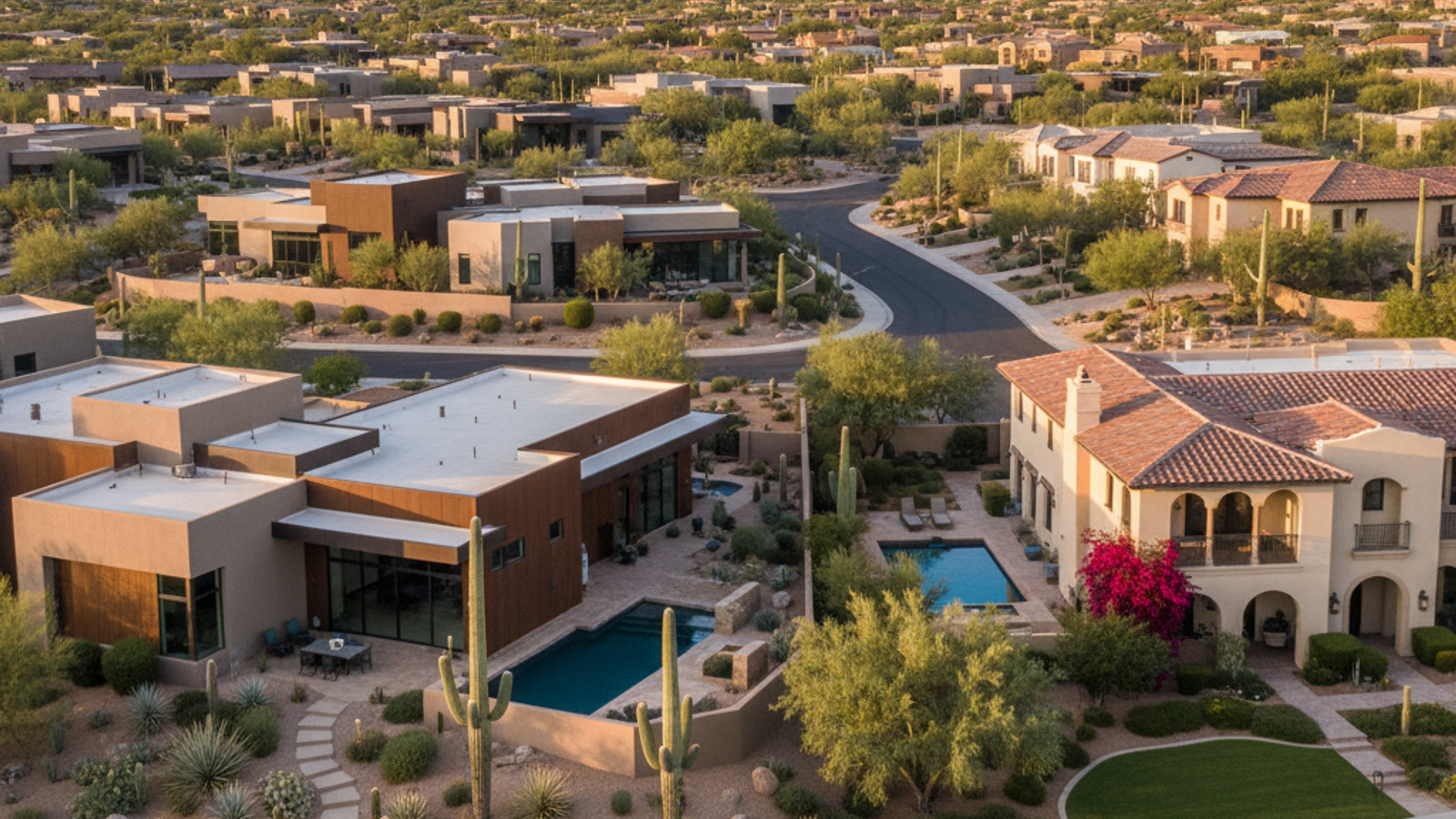
The Scottsdale, AZ housing market continues to stabilize as we move through the spring of 2026. Buyers and sellers are operating in an environment that looks very different from the extreme peaks of recent years.
With a median sale price hovering between $965,000 and $973,000, purchasing a home here requires a clear understanding of local neighborhood variations. Active inventory has grown enough to give buyers choices without flooding the market.
Whether you are looking for a low-maintenance condo near the city center or a large desert estate, knowing the current data is the best way to prepare. The numbers show a clear shift toward a more balanced playing field.
Interest rates and local economic factors continue to shape how transactions unfold. Homeowners deciding to list their properties are finding success when they align their expectations with current appraisal values.
Current Trends in the Scottsdale, AZ Housing Market
As of May 2026, the city holds about a 2.05-month supply of available homes. This level of inventory creates a balanced environment where neither buyers nor sellers hold all the leverage. Sellers can no longer expect multiple offers on day one simply by putting a sign in the yard.
Buyers are successfully negotiating off the asking price across most price points. The average sale-to-list price ratio currently sits at approximately 96.5%. This means buyers have room to request repairs or closing cost credits without automatically losing to competing offers.
Sellers should price their homes accurately from the start to avoid languishing on the multiple listing service. Buyers should use the current inventory levels to make calculated offers based on comparable sales rather than emotion.
Financing contingencies and appraisal buffers are making a strong return in standard purchase contracts. Lenders are closely monitoring these market shifts to ensure appraisals match the agreed-upon purchase prices.
Median Home Prices and Active Inventory
The current median sale price for a Scottsdale home is just under $1 million, keeping it well above the national average. Buyers will find the median price per square foot generally ranges from $430 to $443. This figure fluctuates based on the age of the property and the specific subdivision.
Active inventory has steadily grown since the beginning of the year. This increase means buyers have a wider selection of properties to tour. More choices often lead to fewer bidding wars on standard single-family homes.
New construction projects in the surrounding areas are also contributing to the overall housing supply. As builders complete these projects, existing home sellers face direct competition from move-in ready inventory. Buyers should compare the warranties of new builds against the established locations of older homes.
Days on Market and Pricing Strategies
Homes in the area are averaging 55 to 58 days on the market before going pending. Properties priced at true market value still move quickly, especially if they require no immediate renovations. Buyers are bypassing listings that require extensive cosmetic updates unless the price reflects the needed work.
Overpriced listings consistently face reductions before finding a buyer. Data shows that over 70% of listings experience at least one price reduction if the initial asking price is too high. Testing the market with an inflated number often results in selling below market value after sitting for months.
Sellers who invest in staging and professional photography tend to secure offers faster than those who list vacant properties. A well-presented home stands out in the current two-month inventory supply. Buyers are willing to pay market value for a home that feels ready for immediate occupancy.
Property Types and Housing Options
Scottsdale offers a wide spectrum of housing options across its varied zip codes. The southern and central areas feature a denser urban footprint with attached housing and older single-family builds. Moving north, the landscape shifts to expansive, low-density communities with large custom homes.
Property taxes vary by zip code and subdivision across the city. The primary effective tax rates generally stay between 0.37% and 0.48%. These rates remain competitive for the broader region and help offset the higher entry price points for the area.
Investors also maintain a strong presence in the area, specifically targeting properties suitable for long-term leasing. The local tenant pool remains robust, driven by corporate relocations and seasonal residents. Buyers looking for primary residences will often compete with these investors for turnkey properties.
Condos and Townhomes in Old Town
Old Town features attached housing located within immediate proximity to dining, retail, and commercial centers. Condo median prices often start around $390,000, depending on square footage and building amenities. This price point offers a lower barrier to entry compared to detached homes in the same area.
Buyers looking at this property type should factor in the monthly expenses associated with shared communities. Typical homeowners association dues cover several structural and community features:
- Exterior building maintenance and roof repairs
- Community pools and fitness centers
- Covered parking structures and gated access
- Common area landscaping and trash removal
These monthly fees directly impact a buyer’s debt-to-income ratio during the mortgage approval process. Lenders require full disclosure of all association dues before issuing a final loan commitment. Buyers should review the association’s financial reserves to ensure the community is well-managed.
Single-Family Estates in North Scottsdale
North Scottsdale is characterized by larger lot sizes, gated subdivisions, and expansive single-family homes. Entry price points in these northern zip codes are higher due to land value and custom construction. Single-family homes in this area average upwards of $1,250,000.
Architectural styles feature contemporary desert builds, Pueblo Revival, and Mediterranean influences. Buyers looking here will find homes designed to maximize outdoor living spaces and integrate with the natural terrain. The larger acreage allows for extensive private amenities like custom pools and detached guest houses.
Many of these northern communities also incorporate private golf courses and clubhouses into their master plans. Membership fees for these clubs are usually separate from the standard property association dues. Buyers should clarify all mandatory transfer fees and membership costs before writing a purchase offer.
How Location and Infrastructure Impact Value
Transit access and proximity to geographic landmarks directly impact property appraisal values throughout the city. Scottsdale is seamlessly connected to the greater Phoenix metropolitan area via major arterial highways. This connectivity supports local property values by providing straightforward routes to employment centers.
The Scottsdale Airport serves as a vital hub for corporate and private aviation. This facility drives demand for nearby commercial and residential real estate. Buyers frequently look for homes within a short drive of the airport for business travel convenience.
Municipal investments in road maintenance and utility upgrades also play a role in sustaining property values. Neighborhoods with recently updated infrastructure tend to experience fewer days on the market. Appraisers note these civic improvements when evaluating comparable sales in the area.
Commuting via the Loop 101 Freeway
The Loop 101 freeway acts as the primary north-south artery through the city. Proximity to the freeway provides residents with quick access to neighboring tech hubs in Tempe and Chandler. Commuters rely on this route to bypass surface street traffic during peak morning and evening hours.
Properties located near freeway access points balance commuter convenience with structural sound mitigation. Homes backing directly up to the highway often sell for a slight discount compared to interior neighborhood lots. Buyers should weigh their tolerance for road noise against the benefit of a shorter daily drive.
Future expansion projects along the Loop 101 corridor are planned to accommodate the growing regional population. These transportation upgrades are expected to improve traffic flow over the next decade. Real estate values near new on-ramps typically see a modest boost once construction is completed.
Living Near the McDowell Sonoran Preserve
The McDowell Sonoran Preserve encompasses over 30,000 acres of protected desert habitat on the city’s eastern edge. Homes situated near trailheads or featuring unobstructed mountain views carry a premium price per square foot. Buyers frequently prioritize these geographic features and elevation changes when searching for lots.
Properties bordering the preserve offer immediate access to hiking and outdoor recreation. The inability to develop the protected land guarantees that these views will remain unobstructed. This permanent natural border acts as a strong stabilizing factor for home values in the adjacent neighborhoods.
Sellers with properties near the preserve should highlight these natural amenities in their listing descriptions. Buyers are often willing to pay a premium for lots that offer a sense of privacy and separation from commercial zones. The unique topography of the area ensures that these homes retain their appeal regardless of broader market fluctuations.
Local Schools and Healthcare Facilities
Institutional infrastructure is a primary consideration for buyers analyzing long-term property value and stability. The city is supported by comprehensive public services, including dedicated school districts and expansive medical networks. Proximity to these municipal and private facilities is a standard feature highlighted in local real estate listings.
Access to established healthcare and education centers helps maintain demand even when broader market conditions cool. Buyers often target specific neighborhoods based entirely on the location of these institutions. Sellers near major campuses frequently highlight this proximity in their marketing materials.
The presence of these facilities also attracts secondary businesses like specialized clinics and educational supply stores. This commercial development creates a localized economic ecosystem that supports property values. A strong civic infrastructure base limits the downside risk for real estate investments.
Scottsdale Unified School District Boundaries
The Scottsdale Unified School District serves the majority of the city, extending into parts of neighboring Phoenix and Paradise Valley. The district covers 112 square miles and encompasses numerous elementary, middle, and high school campuses. This large footprint supports the varied housing density found across the region.
Buyers frequently filter their property searches based on specific high school boundaries within the district. A home located just one street over can sometimes fall into a different boundary, altering the available public education options. Buyers should verify exact boundary lines through county records before submitting an offer.
The district regularly updates its facilities, which adds appeal to the surrounding residential blocks. Homes located within walking distance of these updated campuses often generate higher showing traffic. Sellers should provide buyers with current boundary maps to ensure transparency during the transaction.
HonorHealth Campuses and Real Estate Demand
HonorHealth operates multiple major hospital campuses across the city, including Shea Medical Center and Osborn Medical Center. Properties located near these healthcare hubs experience consistent demand from medical professionals seeking short commute times. These facilities act as major local employers, providing economic stability to the surrounding residential real estate market.
Homes within a five-mile radius of these medical centers often see lower days on market. Investors also target these areas for rental properties to lease to traveling nurses and hospital staff. The continuous influx of medical employees provides a steady pool of potential buyers and tenants.
The expansion of outpatient centers and specialized clinics further integrates healthcare into the local neighborhoods. This ongoing commercial investment signals long-term confidence in the area’s growth. Buyers purchasing near these hubs benefit from the sustained demand generated by the medical workforce.
Frequently Asked Questions
Are Scottsdale home prices dropping in 2026?
Home prices are not dropping, but the rapid appreciation seen in past years has leveled off. The median sale price remains strong at roughly $970,000, showing market stabilization rather than a crash. Sellers are simply having to price their homes accurately rather than relying on constant upward momentum.
Is Scottsdale a buyer’s or seller’s market right now?
The area is currently experiencing a balanced market. With just over a two-month supply of available homes, neither side holds extreme leverage during negotiations. Buyers have enough choices to avoid waiving inspections, while realistic sellers can still secure strong offers.
What are the property tax rates in Scottsdale?
Effective primary property tax rates generally sit between 0.37% and 0.48% across the city. The exact percentage depends on the specific local school district and municipal bonds attached to the property. Understanding these local assessments is a practical step before finalizing your annual housing budget.