
The Phoenix metro area continues to expand, and buyers looking at the East Valley often weigh Scottsdale against Tempe. These two neighboring cities share a border but offer entirely different housing markets, price points, and daily commutes.
Scottsdale is known for its higher price tags, golf courses, and master-planned communities. Tempe, anchored by Arizona State University, provides a denser mix of housing types and closer proximity to the urban core. Deciding between the two comes down to your budget, your preferred property style, and how you want to get to work.
Real Estate Costs and Property Types
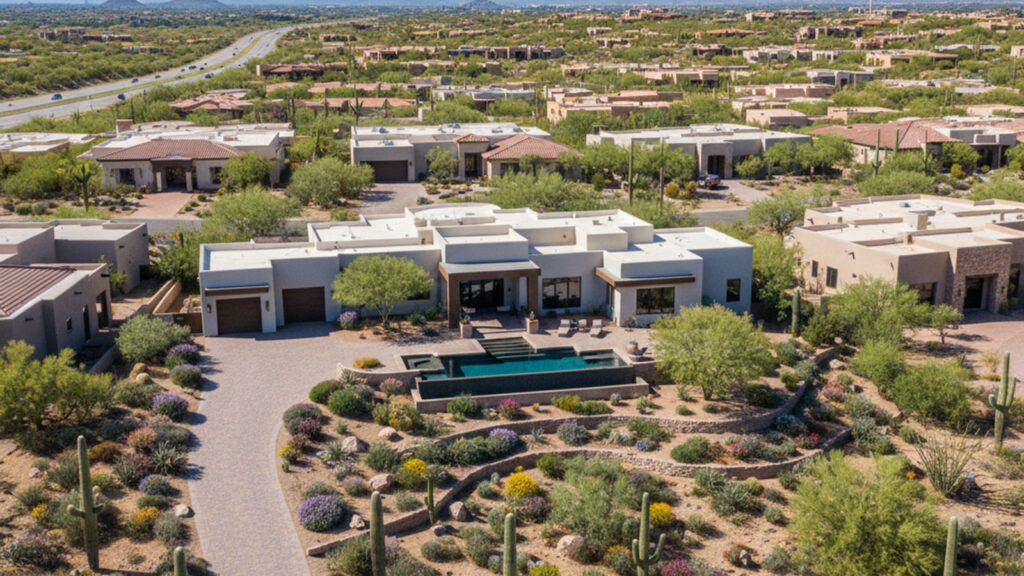
The median home price in Scottsdale runs between $850,000 and $1,000,000 as of 2026. Buyers here primarily find single-family homes, luxury estates, and large master-planned communities. The northern sections of the city feature larger lots and desert landscapes, while the southern areas near Old Town offer a mix of mid-century homes and newer developments.
Tempe offers a lower entry point, with median home prices sitting around $468,000 to $490,000. The housing stock here is strongly influenced by Arizona State University. Buyers will find a large concentration of apartments, condominiums, and older single-family homes built in the 1960s and 1970s.
Proximity to the university campus drives a strong investor market in Tempe. Buyers should expect competition from landlords looking for rental properties near the school. Scottsdale sees less of this student-driven demand, though its seasonal and luxury rental markets remain active.
Property Taxes and HOA Fees
Both cities sit inside Maricopa County, which keeps baseline tax calculation methods similar across the board. The county’s effective property tax rate averages around 0.6%. Scottsdale’s effective rate often falls slightly lower, generally around 0.41% to 0.44%, though higher property values mean the actual tax bills are larger.
Homeowner association fees create a stark difference between the two cities. The average HOA fee in Arizona sits around $448 per month, but luxury communities in Scottsdale often exceed this number. In contrast, many of Tempe’s older neighborhoods have no HOA at all, which keeps monthly housing costs lower.
Monthly Rent and Everyday Expenses
Renters face a noticeable price gap between the two cities. The average monthly rent for a standard apartment in Scottsdale ranges from $1,844 to $2,100. Tempe apartments average between $1,483 and $1,900 per month, providing a more budget-friendly option for those relocating to the valley.
Everyday living expenses follow a similar pattern. Scottsdale carries a premium for dining, shopping, and entertainment, particularly near the Old Town and Scottsdale Quarter districts. Tempe’s retail and dining scenes cater primarily to the university population, keeping everyday prices slightly lower.
Home maintenance and utility costs vary based on the property rather than just the city limits. Buyers should budget for higher cooling bills in older, less insulated Tempe homes compared to newer builds in North Scottsdale. Property insurance premiums will also depend on the age of the roof and the home’s square footage.
Highway Access and Drive Times to Phoenix
Commuting from Tempe to Downtown Phoenix takes about 20 to 25 minutes by car on an average day. Drivers primarily use the Loop 202 or US-60 to connect to Interstate 10. The proximity to Phoenix Sky Harbor International Airport also makes Tempe a practical choice for frequent travelers.
Scottsdale covers a much larger geographic area, stretching over 30 miles from north to south. Driving from South Scottsdale to Downtown Phoenix takes 20 to 40 minutes during off-peak hours. Rush hour traffic on the Loop 101 and Loop 202 can push that drive time to 50 minutes or more.
Buyers looking at North Scottsdale will have the longest commutes to the urban core. If you work in central Phoenix, you should test the drive during morning and evening rush hours before making a final housing decision.
Light Rail and Public Transit
Tempe offers direct access to the Valley Metro Rail. This light rail system runs through the center of the city, connecting residents directly to Downtown Phoenix, Mesa, AZ, and the airport. The streetcar system also provides localized transit around the university campus and Tempe Town Lake.
Scottsdale does not have light rail access. The city relies on a localized trolley system and standard bus routes for public transit. Residents here depend almost entirely on personal vehicles for daily commuting and errands.
Local Schools and Healthcare Facilities
The educational and medical infrastructure in both cities is well-established, though they are managed by different networks. Scottsdale’s municipal boundaries align closely with its primary school district, while Tempe splits its primary and secondary education into separate systems.
Healthcare options are abundant across the East Valley. Both cities maintain large hospital campuses and specialized medical centers to serve their populations.
Here is a breakdown of the primary districts and hospitals in each area. Both cities offer distinct advantages depending on your needs:
- Scottsdale: Served by the Scottsdale Unified School District. Major medical centers include HonorHealth Scottsdale Osborn Medical Center and HonorHealth Scottsdale Shea Medical Center.
- Tempe: Served by the Tempe Elementary School District and the Tempe Union High School District. Major medical centers include Tempe St. Luke’s Hospital.
- Higher Education: Tempe is the main campus for Arizona State University, which dictates much of the city’s infrastructure and development.
Parks, Retail, and Recreation
Scottsdale features extensive high-end retail, anchored by Scottsdale Fashion Square and the outdoor shopping centers in the northern part of the city. The area is known for its concentration of golf courses and desert hiking trails. The Indian Bend Wash Greenbelt provides a continuous multi-use path connecting several parks and lakes through the city’s center.
Tempe centers much of its outdoor recreation around water. Tempe Town Lake offers paddleboarding, kayaking, and miles of paved paths for running and cycling. Papago Park, located on the border of Tempe and Phoenix, AZ, provides accessible desert hiking and is home to the Desert Botanical Garden.
Retail in Tempe mixes large-scale outdoor malls with local shops. Tempe Marketplace provides open-air shopping and dining along the Loop 202. The Mill Avenue district near the university offers a dense concentration of restaurants, cafes, and local retail geared toward the college-town demographic.
Frequently Asked Questions
Is it cheaper to live in Tempe or Scottsdale?
Tempe is more affordable across both housing and daily expenses. The median home price in Tempe sits roughly $400,000 lower than in Scottsdale. Renters also save an average of $300 to $400 per month on apartment leases.
How far is the commute from Scottsdale to Downtown Phoenix?
The drive takes between 25 and 50 minutes during peak rush hour, depending on your starting point. North Scottsdale residents face the longest drive times, as they must drive the Loop 101 down to the Loop 202 or I-10.
Which city has better access to public transportation?
Tempe provides far more public transit options. The Valley Metro Rail runs directly through Tempe, offering a straight route to the airport and central Phoenix. Scottsdale does not have light rail service and requires a car for most daily travel.