
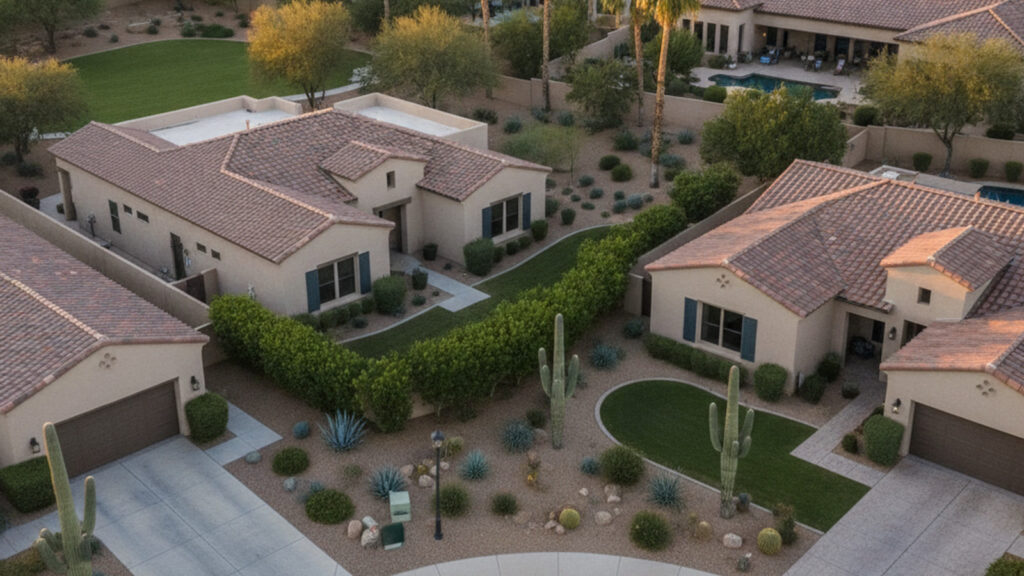
The median sale price for a home in the Scottsdale, AZ housing market sits at roughly $932,500. Homes are staying on the market for about 76 days right now, which gives you real time to think through total carrying costs before you commit.
Property taxes are a big piece of that picture. Arizona’s rates run well below the national average, but the way Maricopa County and the city actually calculate your bill has some quirks worth understanding before you close.
Current Property Tax Rates in Scottsdale
For the 2024/2025 fiscal year, Scottsdale’s combined city property tax rate was $0.9316 per $100 of assessed value – a primary rate of $0.4958 and a secondary rate of $0.4358 per $100. That city figure, though, only accounts for about 15% of your total annual bill.
The other 85% funds everything else. Public schools take the biggest slice at 57%, Maricopa County receives 18%, and special districts make up the remaining 10%. Blend all those layers together and the county’s median effective property tax rate lands around 0.47%.
That’s a number worth sitting with. Arizona’s statewide average effective rate is approximately 0.48%, which is well below the national average of 0.89% to 1.02%. For most buyers coming from out of state, the property tax bill here is a genuine relief compared to what they’d pay on a similarly priced house back home.
How Your Property Tax Bill is Calculated
Arizona runs a two-tiered assessment system that trips up a lot of buyers who are used to how other states operate. The county assessor establishes two separate values for every home: a Full Cash Value (essentially market value) and a Limited Property Value, or LPV. Your taxes are calculated on the LPV – and by law, the LPV can’t increase more than 5% per year, no matter what the market does.
The tax rate itself is also split. Primary tax rates cover the day-to-day operations of school districts, cities, and the county. Secondary tax rates fund voter-approved bonds and special district overrides – think new school buildings or infrastructure improvements.
The math works like this: take the LPV, apply a 10% assessment ratio (that’s the residential rate in Arizona), then multiply by the combined primary and secondary rates. It keeps your taxes predictable even when home prices are moving fast.
Estimating Your Taxes by Home Value
You don’t need to wait for an official assessment to get a ballpark. Multiply the purchase price by 0.47% and you’ve got a reasonable baseline for annual taxes. On a home at the Scottsdale median of $932,500, that works out to roughly $4,382 per year.
An older home with a long-established LPV will often carry a lower tax bill than a brand-new build at the exact same price. That gap can be meaningful.
For the most accurate projection, pull up the property’s address or ZIP code – 85251, for example – directly on the Maricopa County Assessor’s website. The portal shows the historical LPV and the actual taxes paid by the current owner over the past several years. That’s the number you should be working from.
Sales and Real Estate Taxes to Factor In
Property taxes aren’t the only levy to think about. Scottsdale’s combined sales tax rate is 8.05%, dropping to 8% in certain ZIP codes. That total breaks down to a 5.6% Arizona state tax, a 0.7% Maricopa County tax, and a Scottsdale city tax of 1.7% to 1.75%.
These rates do shift. As of July 1, 2025, the city’s transaction privilege tax rate – which functions as a sales tax – settled at 1.70%, with a use tax rate of 1.50%. You’ll run into these when you’re buying furniture, appliances, or hiring contractors for work on your new home.
Finding and Paying Your Bill
Maricopa County bills property taxes annually, paid in two installments. The first half is due October 1 and goes delinquent if it’s not paid by 5:00 PM on November 1. The second half is due March 1 of the following year, with a delinquency deadline of 5:00 PM on May 1.
If your total annual bill is $100 or less, the county requires the full amount by November 1 – no installment option. You can look up your records and pay directly through the Maricopa County Treasurer’s website, though most buyers simply roll these payments into their monthly mortgage escrow and let the lender handle it.
Exemptions and Ways to Lower Your Bill
Arizona has a few programs that can meaningfully reduce what you owe. The Senior Property Valuation Protection Option lets qualifying homeowners freeze their property’s taxable value. There are specific age, income, and residency requirements to meet, but for buyers who qualify, it’s worth pursuing immediately.
Separate exemptions exist for widows, widowers, and individuals with total and permanent disabilities. Each reduces the assessed value of the home, which flows directly to a lower annual bill. File for any of these through the Maricopa County Assessor’s office as soon as you take ownership – don’t wait.
If you think your assessed value is too high, you have the right to appeal. Submit it to the Maricopa County Assessor within the statutory timeframe, which typically opens shortly after the annual valuation notices go out.
New Construction and Special Assessments
New builds come with a different tax profile than resale homes. Because there’s no historical LPV on a brand-new property, the assessor sets a fresh base value at completion – so your initial tax bill will track much closer to what you paid than it would on a comparable older home.
Many new developments in Arizona also sit inside Community Facilities Districts, or CFDs, which work similarly to Mello-Roos fees in California. A CFD adds a special assessment on top of your standard property tax bill to fund infrastructure like roads, water lines, and parks. Always ask the builder – or your agent – whether the home falls within an active CFD before you’re under contract.
Comparing Taxes Across Arizona
Maricopa County sits in a middle-ground position within the state. Pima County carries some of the highest property tax burdens in Arizona, with effective rates around 0.65% to 0.70% and median tax bills ranging from $2,206 to $2,276.
On the other end, rural Greenlee County offers the lowest rates in the state – average annual taxes of roughly $303 to $332, or about 0.46% of median home value. Apache County is even more striking, with effective rates hovering around 0.21%. Those numbers reflect a very different housing market, but they give you useful context for where Scottsdale sits in the broader picture.
Frequently Asked Questions (FAQ)
What is the average property tax rate for a single-family home in Scottsdale, AZ?
The average effective property tax rate in Maricopa County, which includes Scottsdale, is roughly 0.47%. The city’s combined property tax rate for the 2024/2025 fiscal year was $0.9316 per $100 of assessed value. The city’s portion makes up about 15% of the total bill, with the rest going to schools, the county, and special districts.
How do Scottsdale property taxes compare to neighboring cities like Phoenix or Paradise Valley?
Scottsdale, Phoenix, and Paradise Valley are all assessed by Maricopa County under identical rules. The countywide median effective rate is roughly 0.47% across the board. Differences between cities come down to local secondary tax rates and school district overrides.
When are property tax payments due for Scottsdale homeowners?
Maricopa County bills annually and collects in two installments. The first is due October 1 and becomes delinquent after 5:00 PM on November 1. The second is due March 1 and becomes delinquent after 5:00 PM on May 1.
Will my property taxes automatically increase to my purchase price after I buy a house in Scottsdale?
No. Arizona’s Limited Property Value system caps annual increases at 5% regardless of what you paid. Your taxes won’t spike to the purchase price after closing.
Are there property tax exemptions for seniors or primary residents living in Scottsdale?
Yes. The Senior Property Valuation Protection Option freezes the taxable value for qualifying homeowners. The county also offers exemptions for widows, widowers, and individuals with permanent disabilities.
How do I appeal my property tax valuation with Maricopa County if my Scottsdale home is over-assessed?
File the appeal directly through the Maricopa County Assessor’s office within the specified window after your annual valuation notice arrives.