
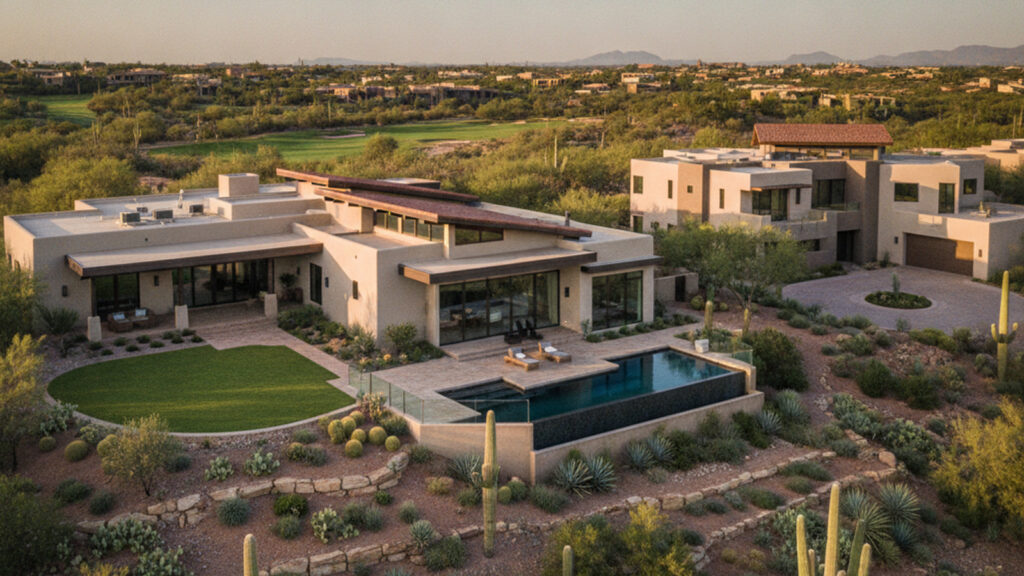
Scottsdale sits inside the Phoenix metropolitan area in Maricopa County, with somewhere between 241,000 and 244,000 residents in 2026. The Scottsdale housing market pulls in investors for two reasons that tend to reinforce each other: a well-established luxury single-family segment and short-term rental demand that doesn’t let up. If you’re looking at investment properties in Scottsdale, AZ, you’re dealing with a market that moves to the rhythm of tourism and seasonal residents – which is different from most places, and worth understanding before you write any checks.
Inventory is sitting around 2,333 available homes, and median sale prices are closing in on the $1 million mark. The numbers are specific enough to be useful, but they don’t tell the whole story on their own. Neighborhood-level metrics and local regulations will do more to shape your decision than any city-wide average.
Is Scottsdale, AZ a Good Place to Buy Investment Property?
The median sale price in Scottsdale is around $932,500 as of mid-2026. Homes are averaging about 76 days on market, which gives you a real window to evaluate a property, run your numbers, and line up financing without feeling like you’re being chased out the door.
Supply sits at roughly 4.1 months. That puts the market in relatively balanced territory – neither a runaway seller’s market nor the kind of buyer’s market where sellers get desperate. For investors, that balance tends to mean more predictable negotiating conditions.
Scottsdale Market Prices and Rent Trends
Sale prices are up about 3.7% year-over-year, and the average sale-to-list ratio lands at 96.3%. Most homes close slightly below asking – useful to know when you’re working backward from a target acquisition cost.
Apartment rents average roughly $1,700 to $2,100 per month. Single-family homes are a different story – rents frequently exceed $3,000 per month, and that gap widens depending on the property size and neighborhood. If your strategy depends on rental income, the product type matters enormously here.
Buyer and Seller Dynamics
About 563 homes have sold recently, so transaction volume is holding steady. Roughly 5.8% of homes are still selling above list price – typically the updated properties in the right locations, where multiple buyers still show up.
For everything else, the balanced supply level works in your favor. You can ask for concessions or repairs without automatically triggering a bidding war. That’s not always true in this market, so use it while it’s there.
Scottsdale Real Estate Market Numbers to Know
A population of 241,000 to 244,000 people creates a consistent floor of housing demand. That base includes long-term renters, seasonal visitors, and corporate tenants – three distinct groups with different needs, and investors who serve all three tend to hold up better through slower stretches.
Cap rates are worth scrutinizing carefully here. One industry source puts the median cap rate in Scottsdale at approximately 3.05%. That’s not a number that jumps off the page, and individual properties will vary based on purchase price and rental income. Go in with clear return expectations.
Population and Growth Patterns
Being folded into the broader Phoenix metropolitan area gives Scottsdale access to a large regional workforce, and that keeps rental demand from being purely seasonal. The economy leans on tourism, healthcare, and technology – sectors that bring contract workers and traveling professionals who often want furnished housing near their job sites. That’s a tenant profile worth paying attention to.
High-ROI Neighborhoods
Old Town Scottsdale tends to rank at the top for short-term rental return on investment. Walkable access to dining, nightlife, and retail means tourist traffic is consistent, not just occasional.
South Scottsdale is where value-add flips show up most often. Older homes at lower price points, updated interiors, back on the market – it’s a straightforward strategy, though execution matters.
Investment Strategies for the Local Market
In Maricopa County, most investors are choosing between long-term leasing, short-term vacation rentals, or house flipping. The strategy you pick determines which property types belong in your search, and it determines a lot about your management load and financing structure too.
A luxury custom home and a two-bedroom condo near downtown aren’t competing for the same tenant. Match your approach to what you can actually manage and finance, not just to what sounds appealing.
Buy-and-Hold Rentals
Long-term tenants mean consistent monthly income and no nightly turnover headaches. With single-family rents frequently topping $3,000, there’s real cash flow potential while you wait on appreciation.
Arizona’s property tax structure helps make buy-and-hold work, especially for out-of-state buyers. The average effective rate runs around 0.5% to 0.6%, which keeps carrying costs lower than you’d face in most comparable markets.
House Flipping and the 70% Rule
The 70% rule is the standard entry point for flip math: pay no more than 70% of the after-repair value, minus your renovation costs. Simple in theory.
In a market where the median sale price is $932,500, finding properties where that math works takes patience. Distressed inventory and off-market deals in South Scottsdale are your best shot at making the numbers realistic.
Common Rules of Thumb
The 1% and 2% rules – where monthly rent equals that percentage of the purchase price – are largely theoretical in Scottsdale’s single-family market. High property values make them hard to hit. Some multi-unit properties come closer, but don’t anchor your underwriting to a benchmark the market rarely produces.
The 3-3-3 rule is more practical here: three months of mortgage payments held in reserve, three months of vacancy built into your projections, and three contractor quotes before any major repair. Cash-on-cash return is the other number to track – most investors aim for a figure that clears standard index funds, often cited as the 7% rule.
Short-Term and Month-to-Month Rentals in Scottsdale, AZ
Scottsdale requires all short-term rental properties – any stay under 30 days – to be registered and licensed annually. This isn’t optional, and the compliance steps aren’t complicated, but they need to happen before you list anything on a vacation rental platform.
The city enforces nuisance and party-house bans. You’re required to notify neighbors and provide emergency contact information. Know that before you close.
Short-Term Rental Regulations
The annual licensing fee is $250 per property. You also need to carry at least $500,000 in liability insurance to operate legally within city limits.
Running an unregistered rental starts at fines of $150 to $500 and can result in license revocation. On top of that, combined state, county, and city transient lodging taxes total approximately 13.05% – factor that into your pro forma before you decide whether short-term makes sense for a given property.
Furnished and Month-to-Month Demand
Month-to-month furnished rentals sit between long-term leases and nightly stays – and they work well in a market like Scottsdale, where traveling nurses, corporate relocations, and snowbirds all need something that isn’t a six-month lease but also isn’t a hotel.
Rentals of 30 days or more bypass the short-term licensing requirements entirely. That means premium rent for a furnished unit, no nightly turnover, and no transient lodging tax. For the right property, it’s worth running the numbers against both approaches.
Where to Buy Scottsdale Investment Properties
With roughly 2,333 homes available across the city, inventory isn’t the problem. Matching your budget to specific neighborhood price points is where the real work happens.
North Scottsdale and the southern part of the city are effectively different markets – different property types, different tenant expectations, different price floors. Know which one you’re buying into.
Top Neighborhoods for Investors
North Scottsdale, DC Ranch, and Silverleaf attract investors targeting luxury appreciation and high-net-worth tenants. Custom homes, proximity to premium golf courses, and a tenant profile that’s less price-sensitive.
McCormick Ranch and Gainey Ranch are established communities with solid long-term rental demand. Kierland draws investors because of its walkability and the quality of its tenant base. These aren’t flashy picks, but they’re consistent.
Finding Commercial and Residential Inventory
On the residential side, the range runs from downtown condos to large estates in Troon North and Pinnacle Peak. Days on market average 76 right now – track that number property by property, because a listing that’s been sitting gives you negotiating room the fresh ones don’t.
Commercial investors will find retail spaces and multi-family complexes in Scottsdale. A broker who specializes in commercial real estate here is worth the relationship – off-market opportunities and commercial listings that never hit the public portals are real, and you won’t find them on your own.
How to Start Investing in Scottsdale
Before you start writing offers, get your financing picture clear. Lenders are looking at your debt-to-income ratio and the projected rental income of the property, and having a coherent business plan in place before you apply makes a measurable difference in your loan terms.
Your team matters as much as your capital. A local attorney, a property manager, a reliable contractor – none of that should be assembled after you’re under contract.
Financing and Property Valuation
Deferred maintenance and outdated floor plans are the two factors that depress purchase prices most consistently. That’s exactly why investors target them – lower acquisition cost creates room for a renovation budget that still pencils out.
Get pre-approved for an investment loan before making offers. For non-owner-occupied properties in Arizona, lenders typically require 20% to 25% down. Know your number going in.
Local Investor Groups and Resources
Connecting with other investors shortens your learning curve on local market conditions. Real estate investing classes and local meetups are where off-market deals and contractor referrals actually circulate.
Property managers, lenders, and contractors tend to show up in the same rooms. Building that network before you need it is the move – you don’t want to be assembling a team while a deal is ticking.
Frequently Asked Questions (FAQ)
What are the current rules and zoning laws for operating a short-term rental in Scottsdale?
Yes, the city requires owners to register properties rented for less than 30 days annually and pay a $250 fee. You must carry at least $500,000 in liability insurance and provide emergency contact information to neighbors. Owners must also collect and remit combined transient lodging taxes of approximately 13.05%.
Which Scottsdale neighborhoods offer the best ROI for long-term rental properties?
It depends on your investment budget and target tenant. McCormick Ranch and Gainey Ranch offer strong demand for established, long-term leases near golf courses. North Scottsdale and DC Ranch attract high-net-worth tenants seeking luxury single-family homes.
How much should I budget for HOA fees and property taxes when buying Scottsdale investment real estate?
HOA fees vary widely based on the specific community and the amenities provided. For property taxes, Arizona maintains an average effective rate of around 0.5% to 0.6% of the assessed home value, keeping holding costs relatively low for investors.
Does the peak tourist season impact the timeline for buying and closing on a Scottsdale investment property?
Yes, the winter months often see increased buyer activity from seasonal residents looking for homes. Properties currently average about 76 days on the market, though, which gives investors a reasonable window to negotiate and close regardless of the season.
Can out-of-state investors qualify for local financing on a Scottsdale vacation home?
Yes, out-of-state buyers can secure financing for investment properties in Maricopa County. Lenders will evaluate your credit profile, your down payment amount, and the property’s potential rental income to determine your loan terms.
Is it more profitable to invest in a luxury condo in Old Town or a single-family home in North Scottsdale?
It depends on your chosen rental strategy and holding period. Old Town condos cater well to tourists and short-term renters due to walkable amenities, while North Scottsdale single-family homes offer strong long-term appreciation and attract luxury lessees.